Getting there matters
Delivering a precision camera to a lunar polar site is an open engineering question. This page sets out how the hardware could reach the surface — without claiming a selected launch provider, vehicle, lander, or deployment architecture.
Transport
Moving precision hardware to the Moon
Three considerations shape any delivery plan. Each one has to survive the journey before the camera can ever look back at Earth.
Launch and payload integration
The camera and its support systems would have to ride from Earth toward the Moon as a carefully packed payload, secured against the loads of launch and the long transfer.
Descent and landing
A controlled descent would need to bring the instrument down near a chosen polar site, where rough terrain and low sun angles make a precise, gentle touchdown demanding.
Payload safety
Shielding and shock isolation would have to protect optics and electronics through vibration, vacuum, radiation, and the wide temperature swings of the trip and the arrival.
Under evaluation
Commercial lunar landers as a delivery path
A commercial lunar lander is one method we are considering for getting the camera to the surface. The idea would be to fly the installation as a payload on a lander and either set it down directly at a preselected coordinate, or land nearby and survey for the best final camera spot on the surface. No provider, vehicle, or deployment architecture has been selected — this remains an open mission-design question.
- Direct placement: less surface travel, but it demands high landing precision
- Survey-then-place: more flexibility, but it adds mobility and complexity
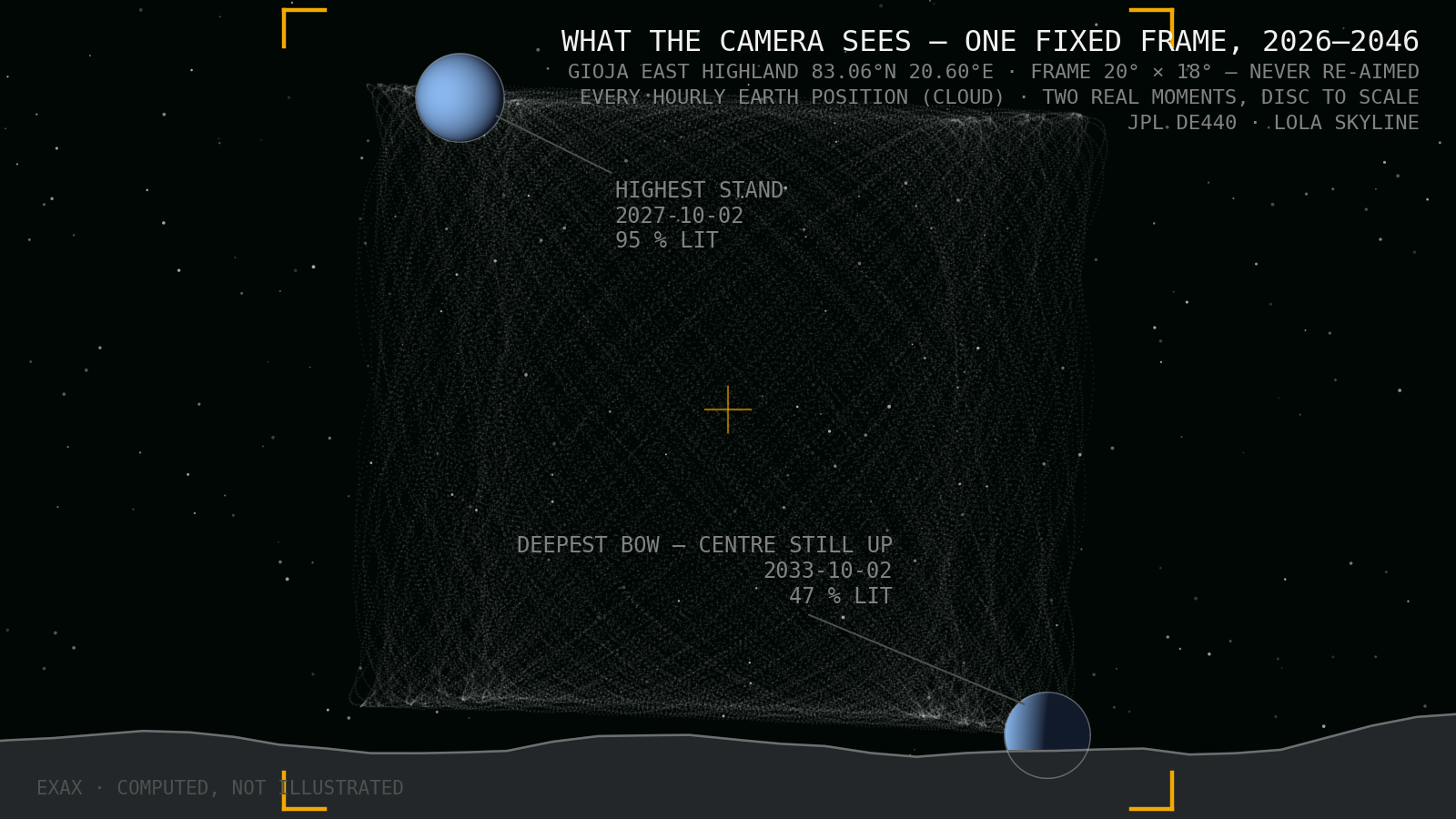
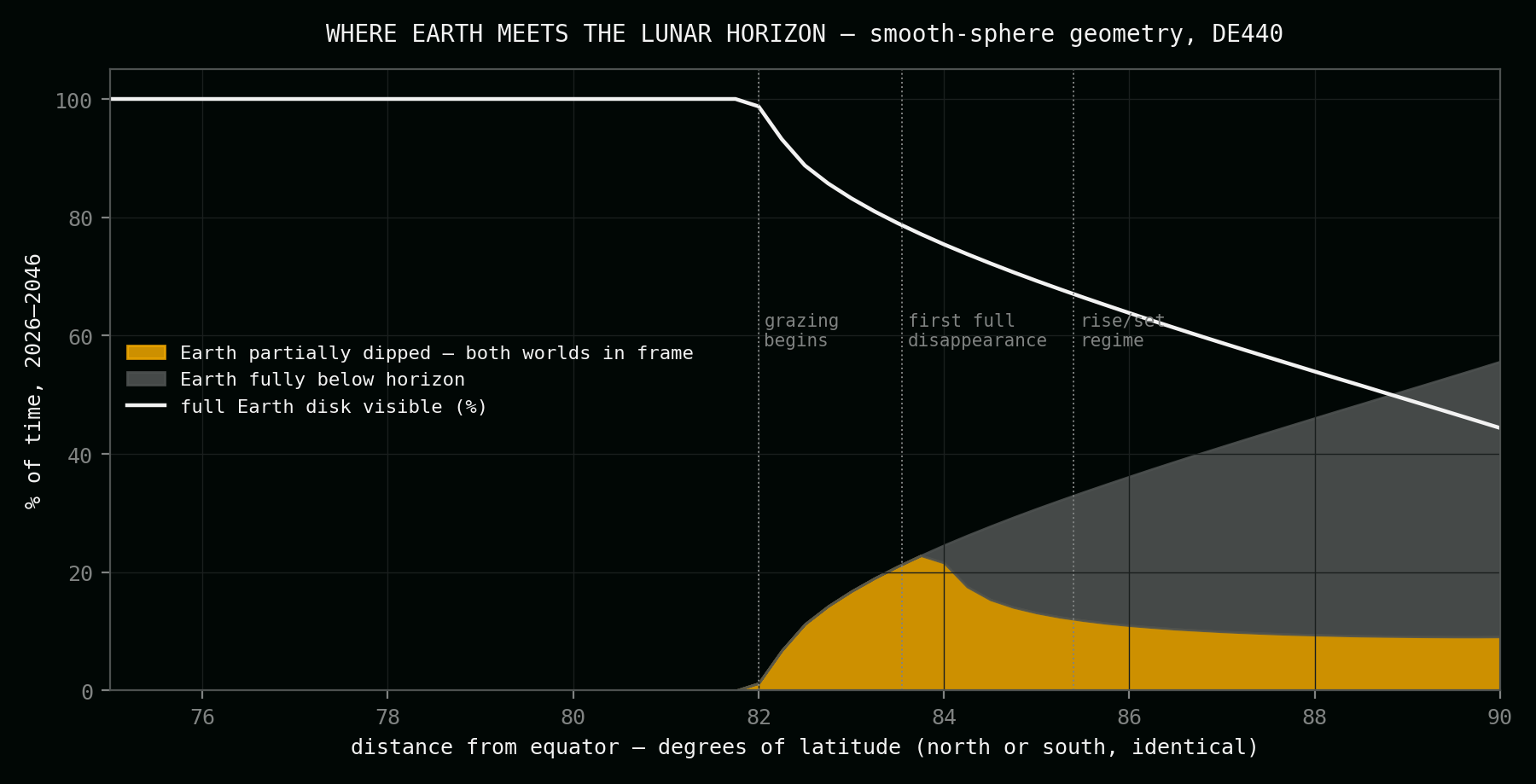
- Either path must reach a polar summit site on an Earth-facing meridian
Common questions
The path to the surface raises practical questions about how the hardware could move and arrive intact. These are concept-stage answers, not committed plans.
How would the hardware get to the Moon?
It would launch from Earth as a payload and travel to the Moon aboard a lander. The specific launch and delivery route is not yet chosen.
How precise does the landing need to be?
That depends on the approach. Placing the camera directly at a site needs high precision; landing nearby and surveying for a spot is more forgiving but more complex.
What protects the camera on the way?
Thermal shielding and shock isolation would guard the optics and electronics against launch loads, vacuum, radiation, and large temperature swings.
Could the equipment survive the journey?
Hardware bound for the Moon is normally proven through vacuum and thermal-cycling tests on the ground before flight, so it can endure the conditions it will meet.
Who would handle the logistics?
Delivery would rely on established aerospace capability for integration, testing, and transport. exax has not announced or committed to any partner.
What about redundancy?
Critical systems on a one-way trip would need backups, because there is no way to repair the installation once it is on the lunar surface.
Want more detail?
The transport question connects to the camera, the site, and how the view returns to Earth. Reach out to discuss the concept.
Help bring the camera to the Moon
Delivering hardware to a lunar polar site is one of the hardest parts of this concept. Follow the project, explore the wider mission design, or help move it forward.