Live signal transmission
How a continuous high-resolution Earth view could travel from the lunar surface back to viewers on Earth. These are conceptual options, not a chosen system.
Direct path
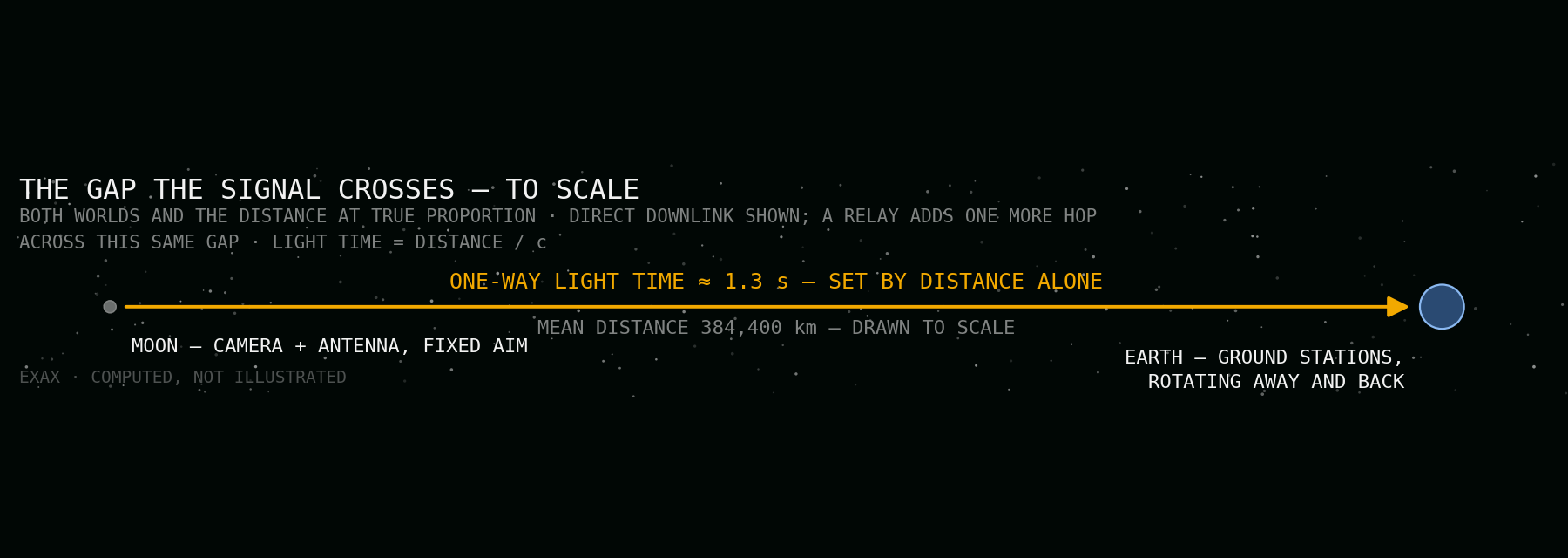
Line of sight from the lunar surface to Earth
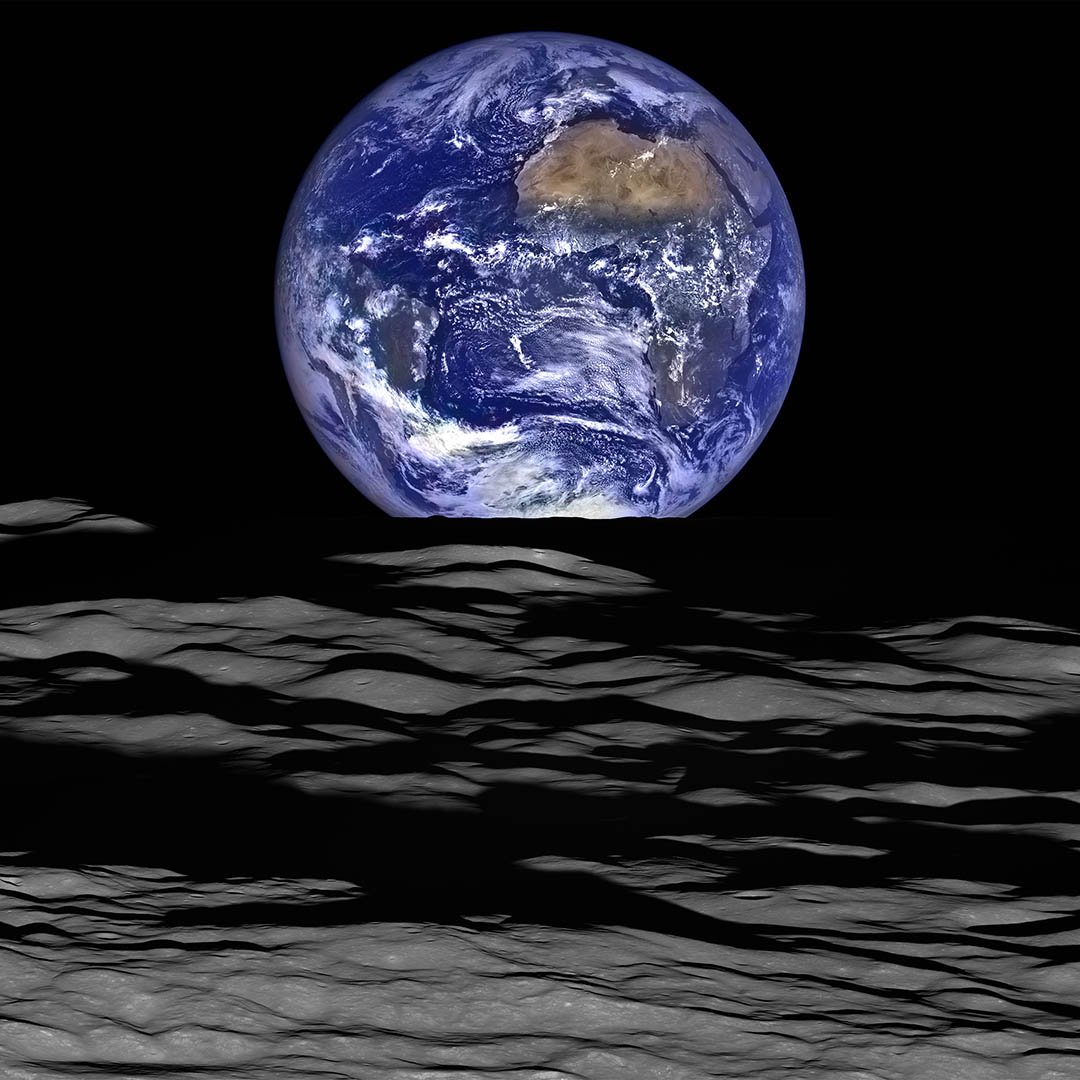
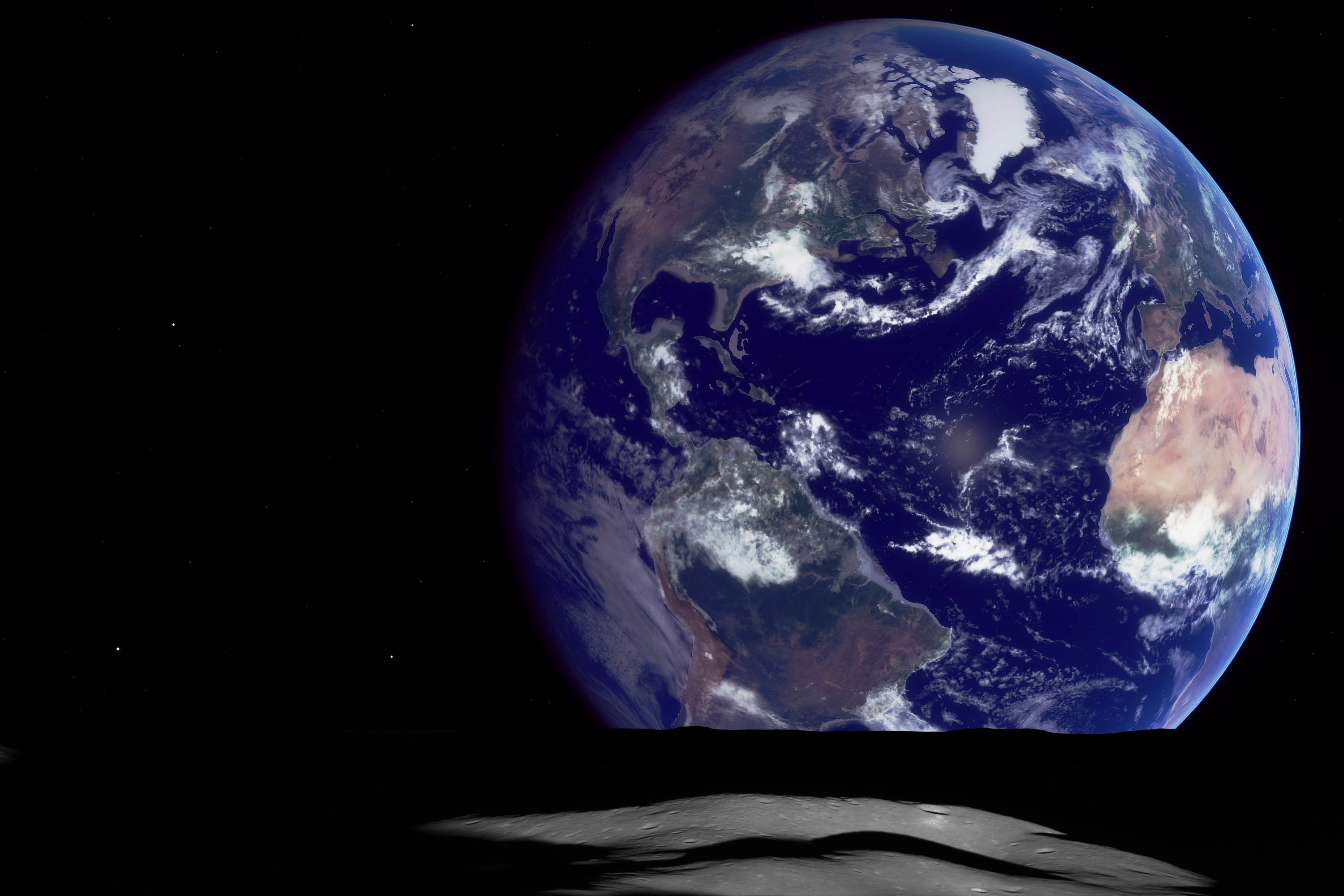
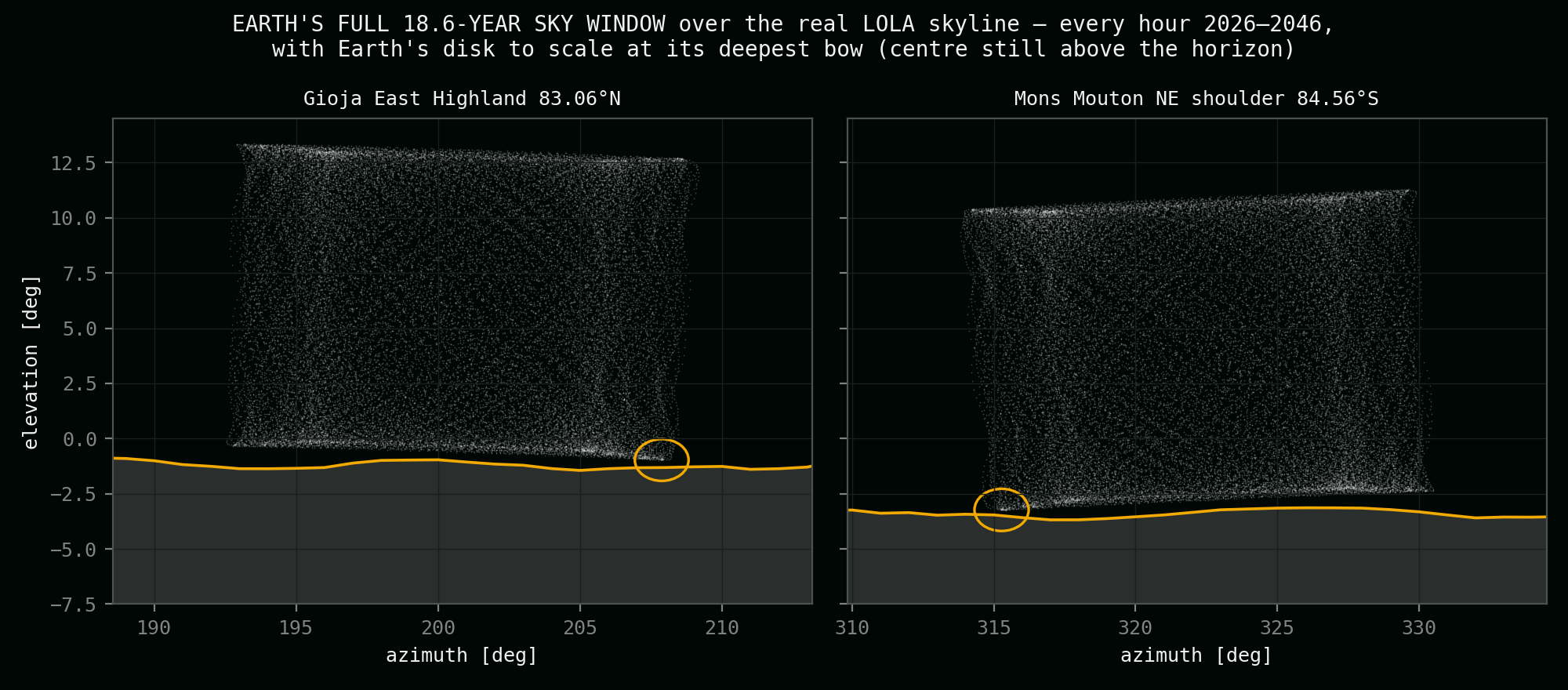
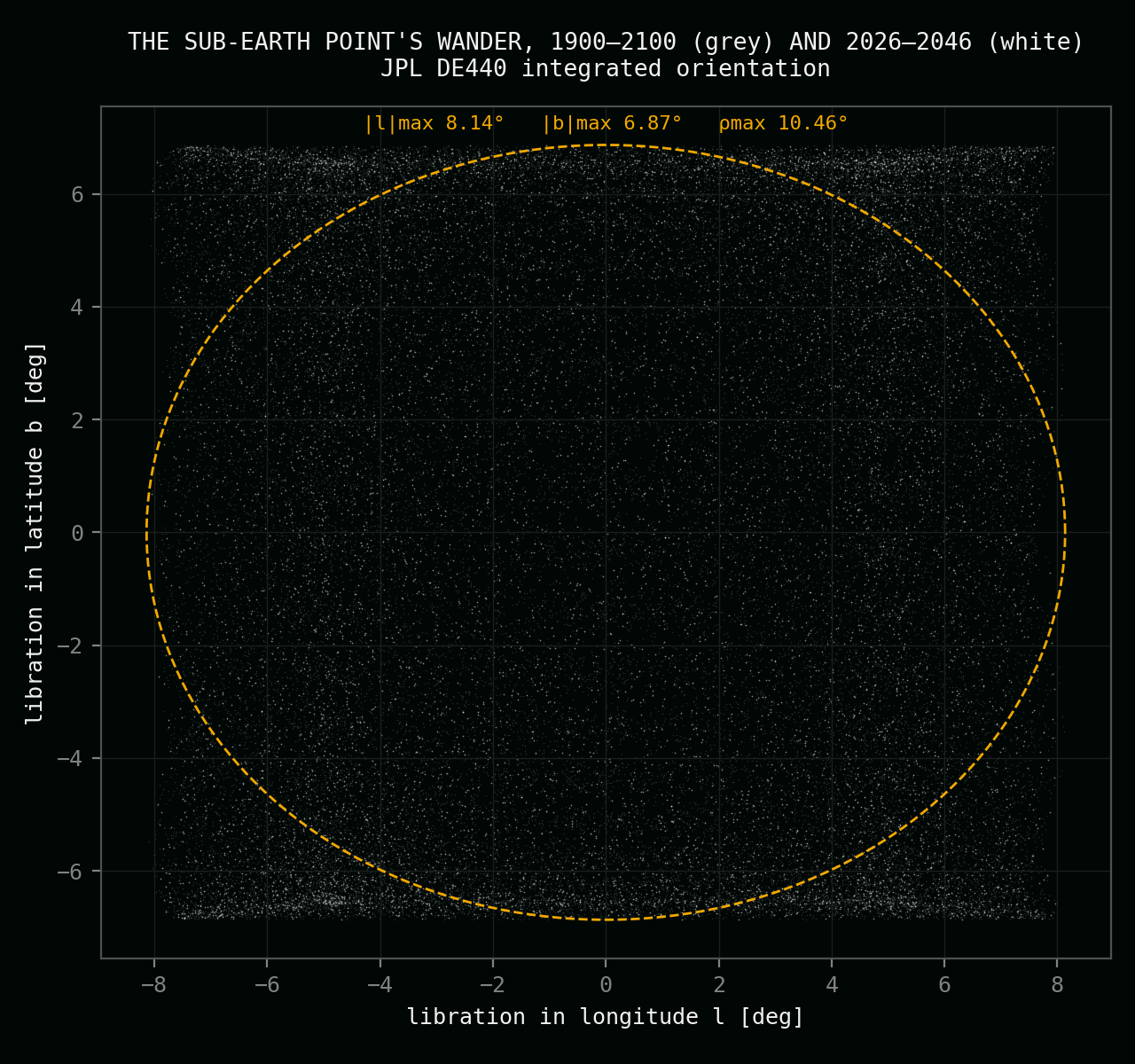
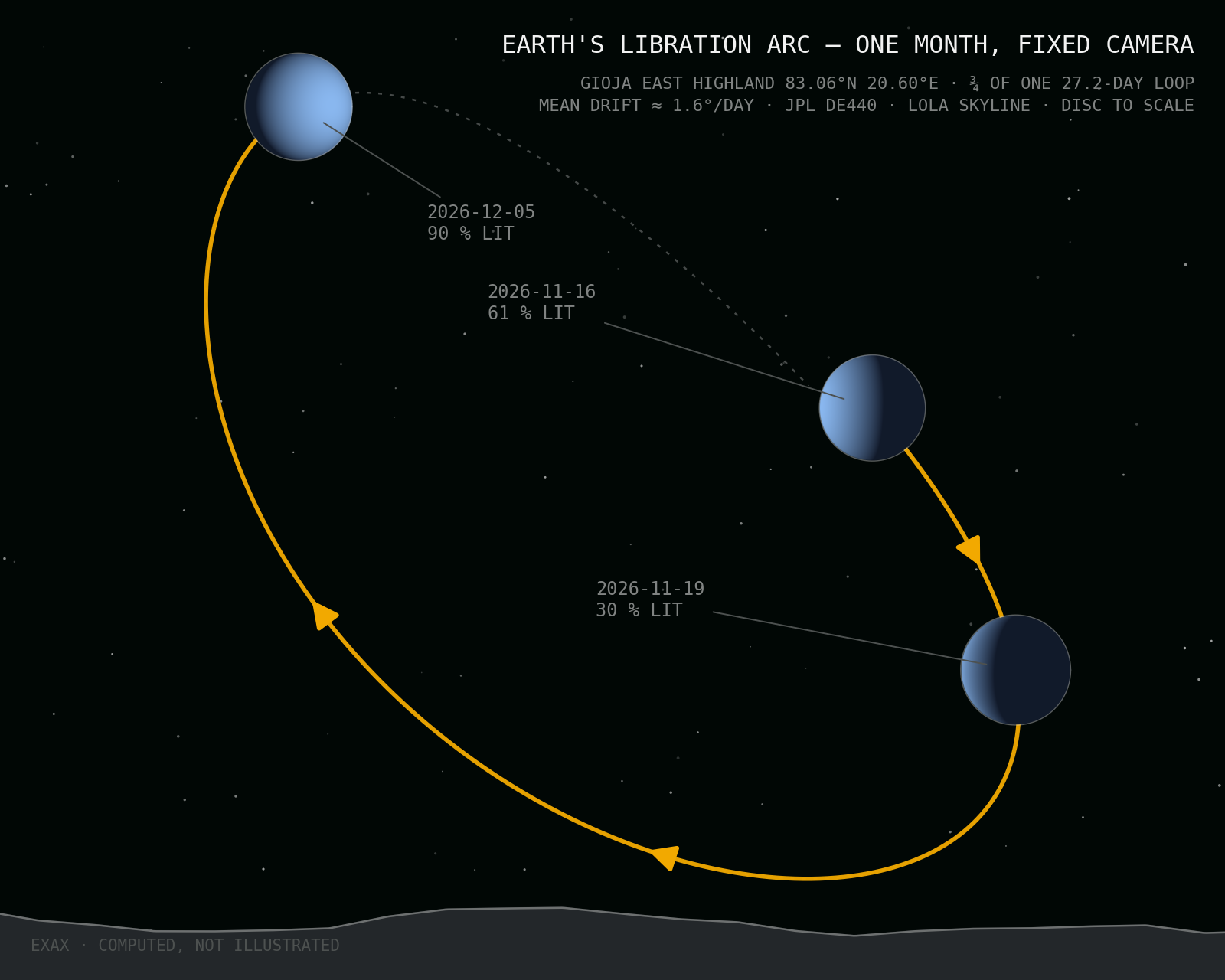
From a near-polar site on the Moon's Earth-facing side, Earth stays almost fixed above the horizon — which keeps a transmitting antenna pointed at the same patch of sky for long stretches. A direct downlink to ground stations on Earth is the simplest route: no intermediaries, just the open distance between the two worlds.
- Roughly 1.3 seconds of one-way light delay, set by distance alone
- Best raw image quality when the link budget allows it
- Limited to the hours when a given ground station can see the Moon
Relay path
Relay satellites in lunar orbit
When a ground station cannot see the Moon, or the terrain blocks the direct view, a satellite in lunar orbit could pick up the signal and pass it on. A relay extends coverage toward continuous service and softens the gaps a single direct link would leave — at the cost of an extra hop and a more complex link to design and depend on.
- Coverage during windows when no Earth station has line of sight
- An additional hop adds latency and another point that must stay healthy
- Treated here as an option — exax does not operate or claim a relay
Shared infrastructure
Integration with existing lunar communications
A growing set of deep-space and lunar communication systems already carries data between the Moon and Earth. Rather than build everything from scratch, the concept assumes the camera's stream could ride on this established infrastructure where capacity is available — gaining redundancy and reach without reinventing the network.
- Reuse of proven ground-station and deep-space links instead of bespoke hardware
- Shared capacity means schedules and bandwidth are not exclusive to one feed
- A high-resolution live stream is demanding, so available capacity is the constraint
Comparison
Trade-offs between the three paths
Each route balances image quality, latency, and reliability differently. The right answer depends on the chosen site, the available infrastructure, and how much continuity the live view needs.
Signal quality
A direct downlink can offer the cleanest, least-compressed image when the link budget allows. A relay or shared network may need more compression to fit available capacity, which softens fine detail.
Latency
Earth and the Moon sit roughly 1.3 light-seconds apart, so the direct path is already near that floor. Every relay or extra hop adds a little more delay on top — small, but real for a live feed.
Reliability
A single direct link goes dark whenever the ground station loses sight of the Moon. Relays and shared infrastructure add redundant routes, so the view can continue when one path is unavailable.