
Lunar observation systems
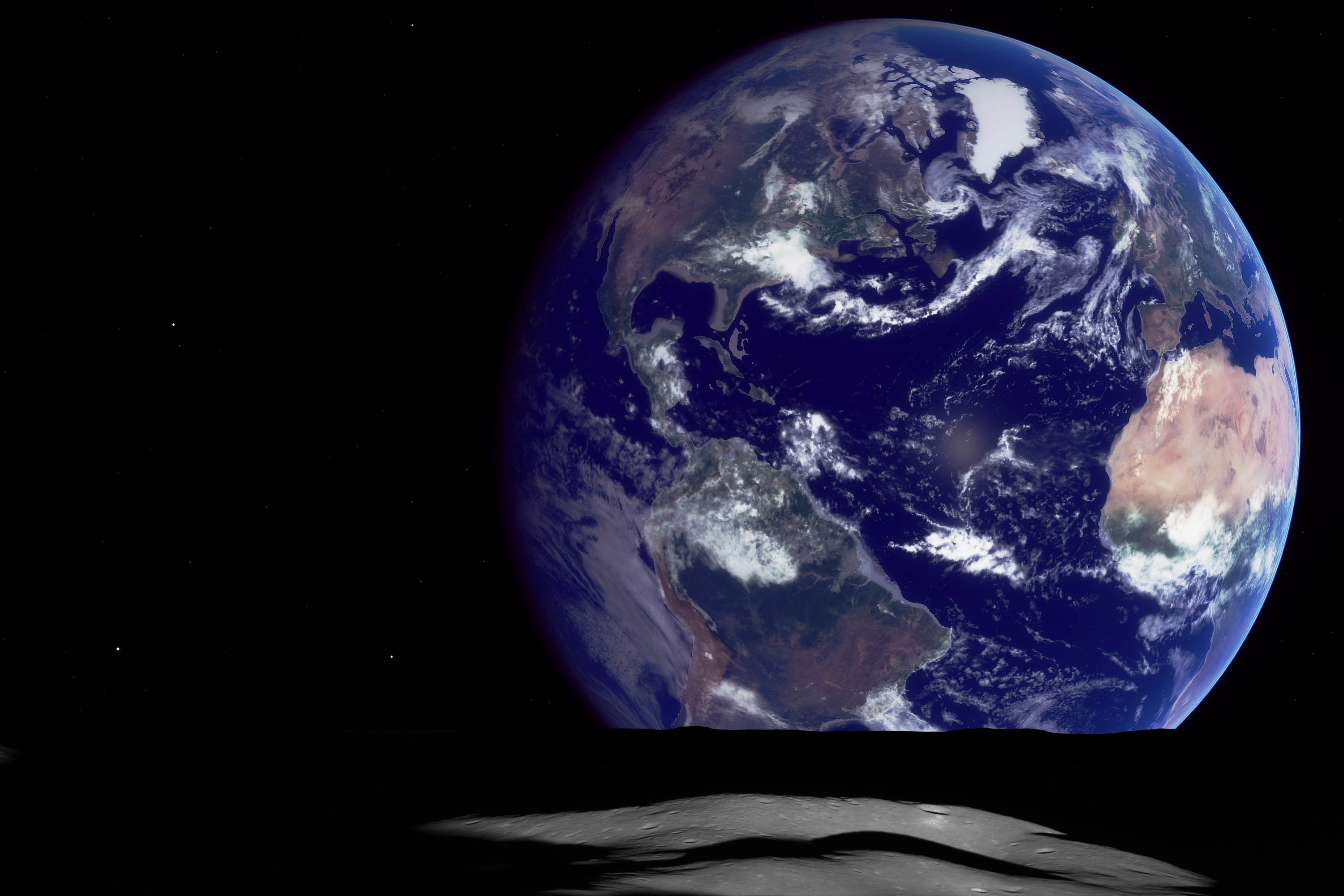
The concept depends on a camera system able to produce a stable high-resolution live view of Earth from the lunar surface — designed to capture our planet continuously from the Moon.
Resolution
An 8K view of the whole Earth
8K here means the UHDTV2 / UHD-2 broadcast standard: 7680 × 4320 pixels in a 16:9 frame — about 33.2 million pixels, twice the resolution of 4K in each dimension. Broadcasters such as NHK have already demonstrated live 8K television, so the imaging chain itself is not the limiting factor. The harder question is holding that detail steady from another world.
- Holds the entire Earth disc in a single sharp frame
- Observes without atmospheric blur or interference
- Feeds a continuous live view across the lunar distance
Standards references:
Engineering
Built for the lunar environment
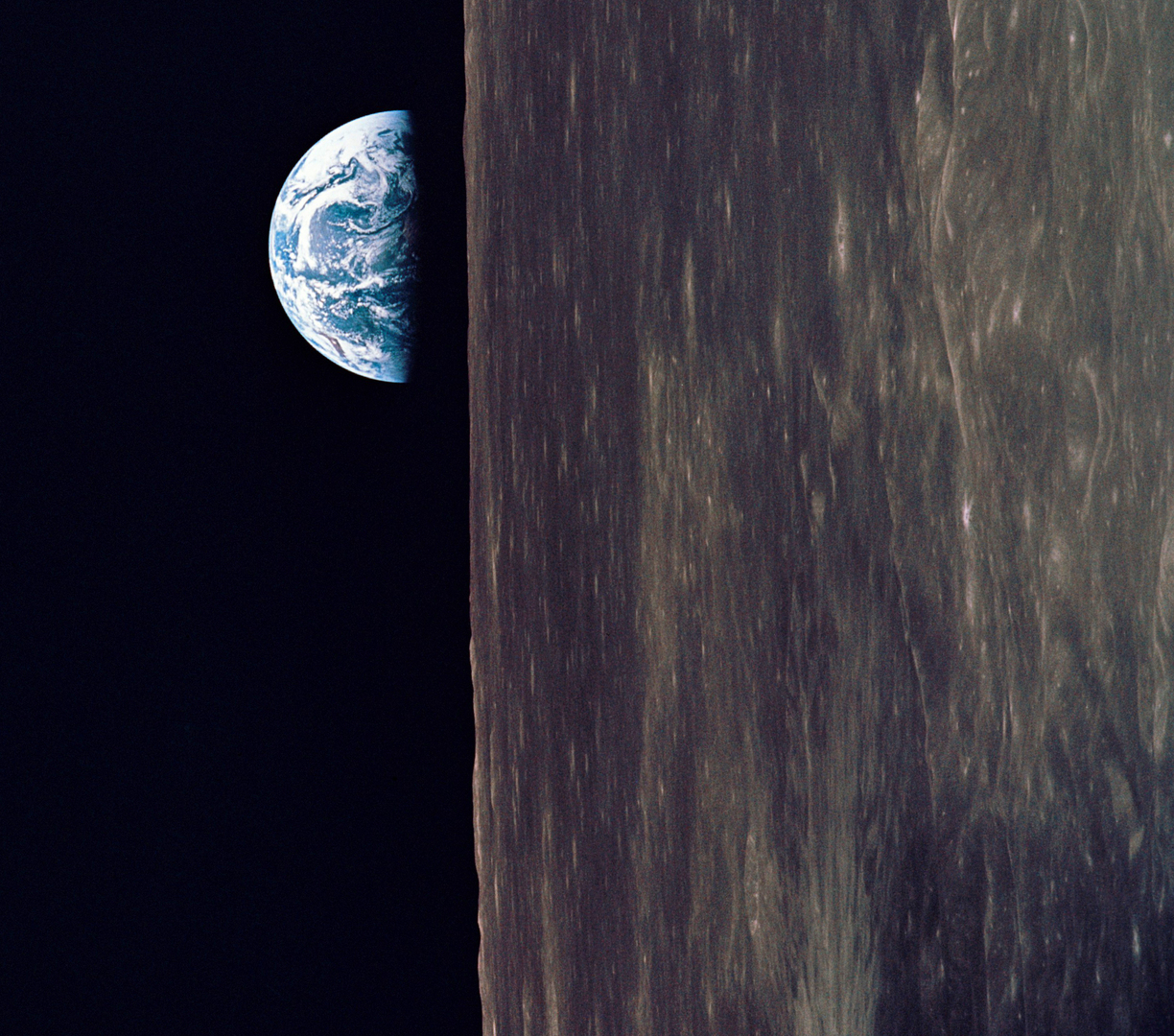
Resolution is only part of the problem. A camera on the Moon would face extreme temperature swings, radiation, and abrasive dust — and still need to keep a precise, unmoving view of Earth. Three considerations shape the design.
Durability in a harsh environment
Optics and housing would need to be sealed against lunar dust and hardened for radiation and a swing from deep cold to direct sunlight — surviving where Earth hangs in a black sky.
Power efficiency
Continuous imaging has to fit the energy a polar site can actually provide. The system should draw modestly while keeping constant watch on the planet below.
Remote operation
With no one on site, focus, exposure, and orientation would be commanded from Earth across a signal delay of roughly a second and a half each way — leaving little room for error.
Why a high-resolution live view matters
Research
Earth seen whole, from one steady point
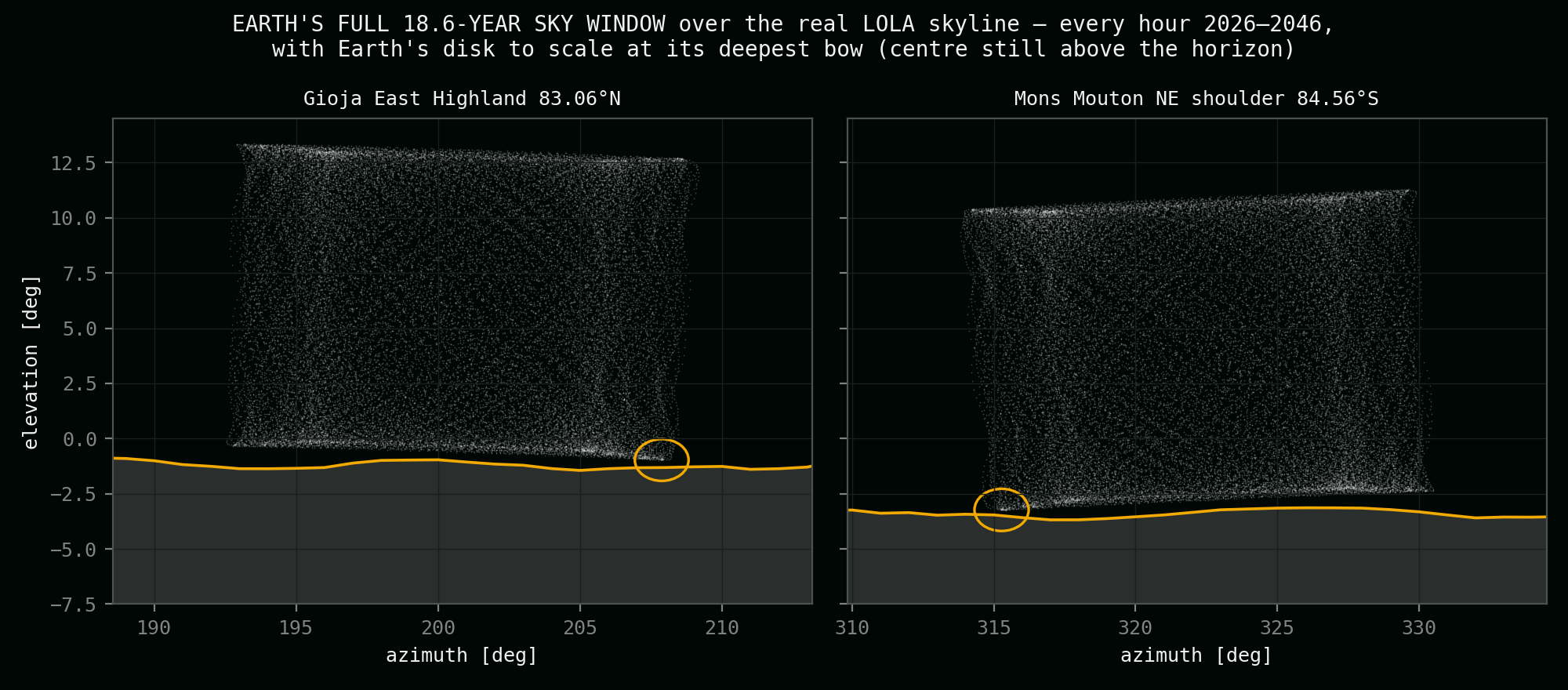
A fixed lunar vantage point could show the full visible disc at once — weather systems, cloud patterns, and the moving day–night line — a continuous wide view that complements the closer, partial coverage of satellites in Earth orbit.
Inspiration
A live resource for classrooms worldwide
An open, continuous feed would let students and citizens watch Earth as it truly is, suspended against the dark. Following the planet from the Moon turns an abstract idea into something you can simply look at, any day.
Questions
Common questions about the camera concept and how it would operate from the Moon. These are open design questions, not fixed specifications.
What does 8K mean here?
It refers to the UHD-2 broadcast standard — 7680 × 4320 pixels, about 33.2 million per frame. Cameras able to record at this resolution are commercially available, so the format is a baseline rather than an obstacle.
How would it survive lunar dust?
Abrasive dust is one of the central durability questions. A workable design would need sealed, coated optics and a housing hardened against dust, radiation, and extreme temperature swings.
How would power be managed?
Continuous imaging has to fit the lighting at a lunar polar site. The power concept — solar availability and storage through shadow periods — is examined separately on the power page.
Could it be controlled from Earth?
With no operator on site, adjustments such as focus, exposure, and orientation would be commanded remotely across a signal delay of roughly a second and a half each way.
How does the image reach Earth?
A high-resolution live image is only useful if the signal can be transmitted reliably back to Earth. The transmission path is a problem in its own right, covered on the transmission page.
Where would the camera be placed?
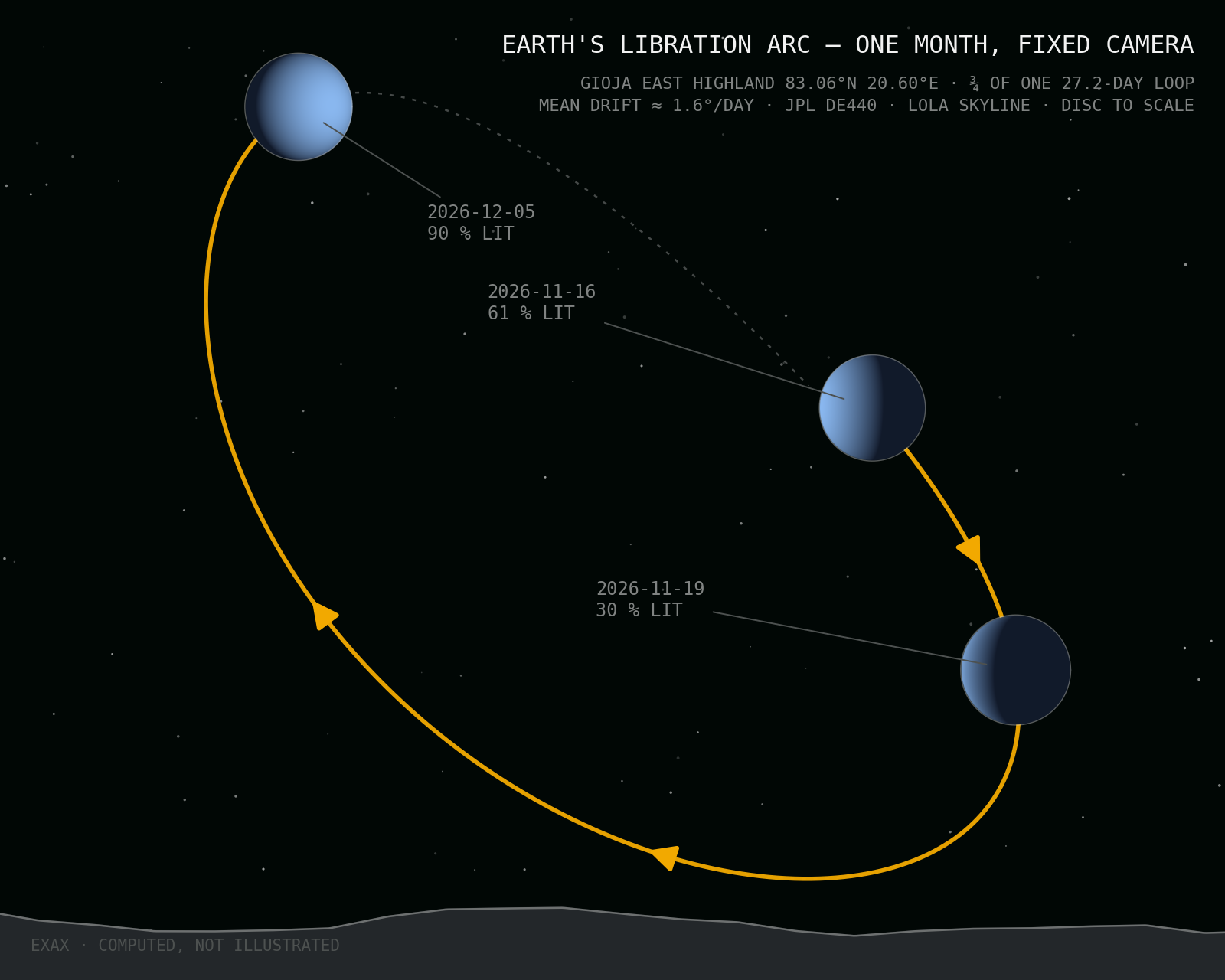
The final camera system depends on the chosen lunar polar site and the resulting horizon geometry. Two candidate sites are described on the locations page.