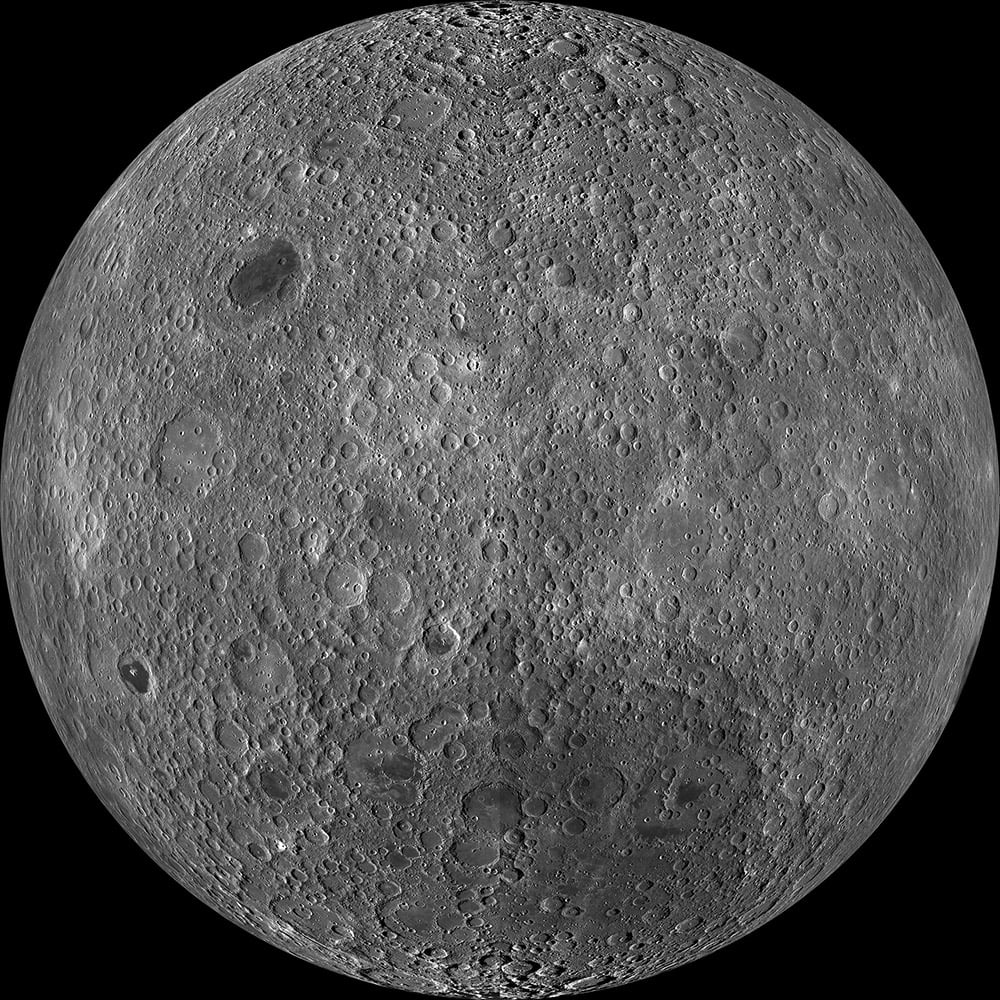
Sub-Earth meridian · Lunar surface
SEE EARTH
LIVE FROM MOON
A stationary 8K observatory on the Moon's near side — Earth permanently above the horizon, never rising, never setting.
The concept
A fixed view of a changing planet
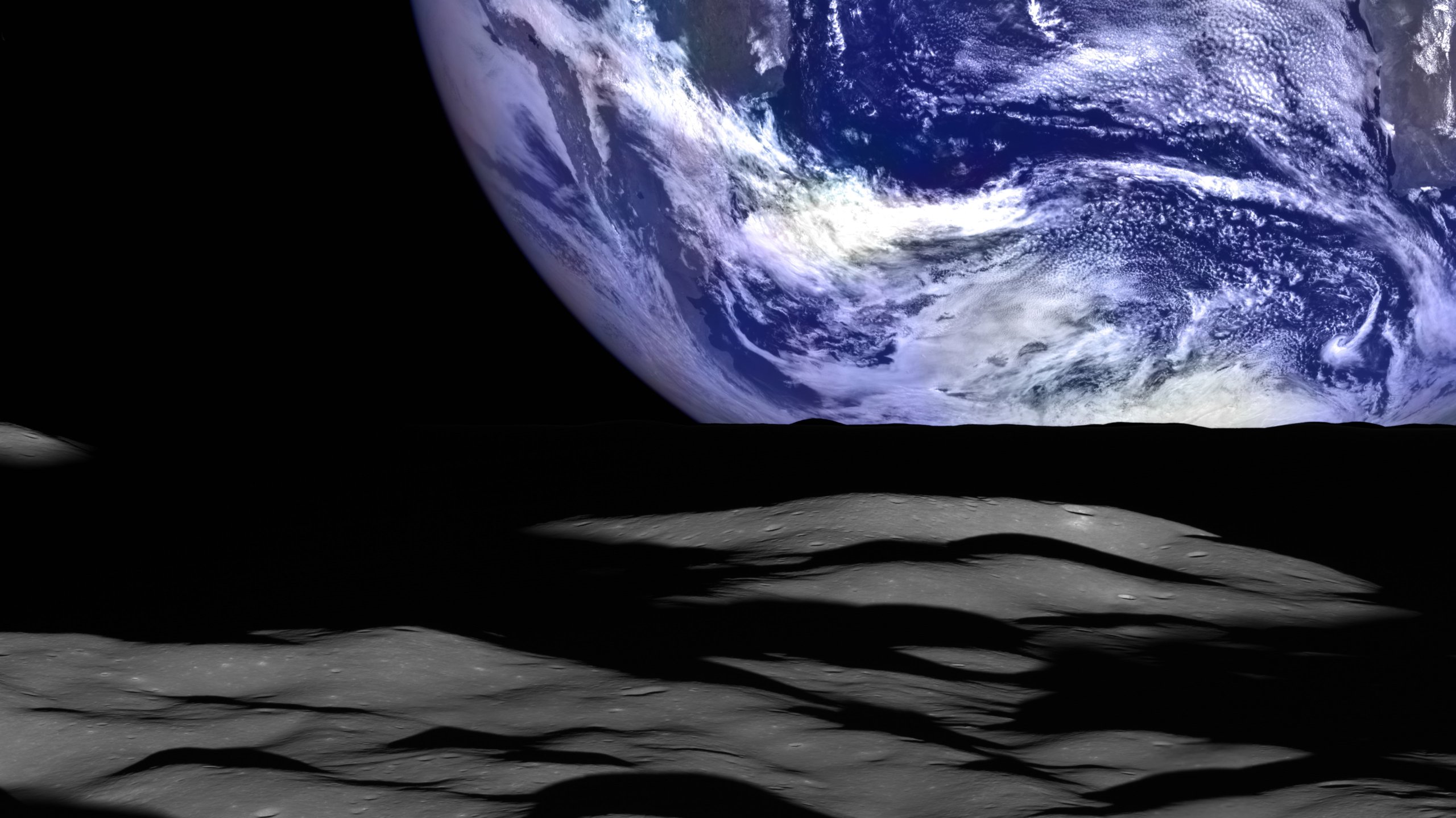
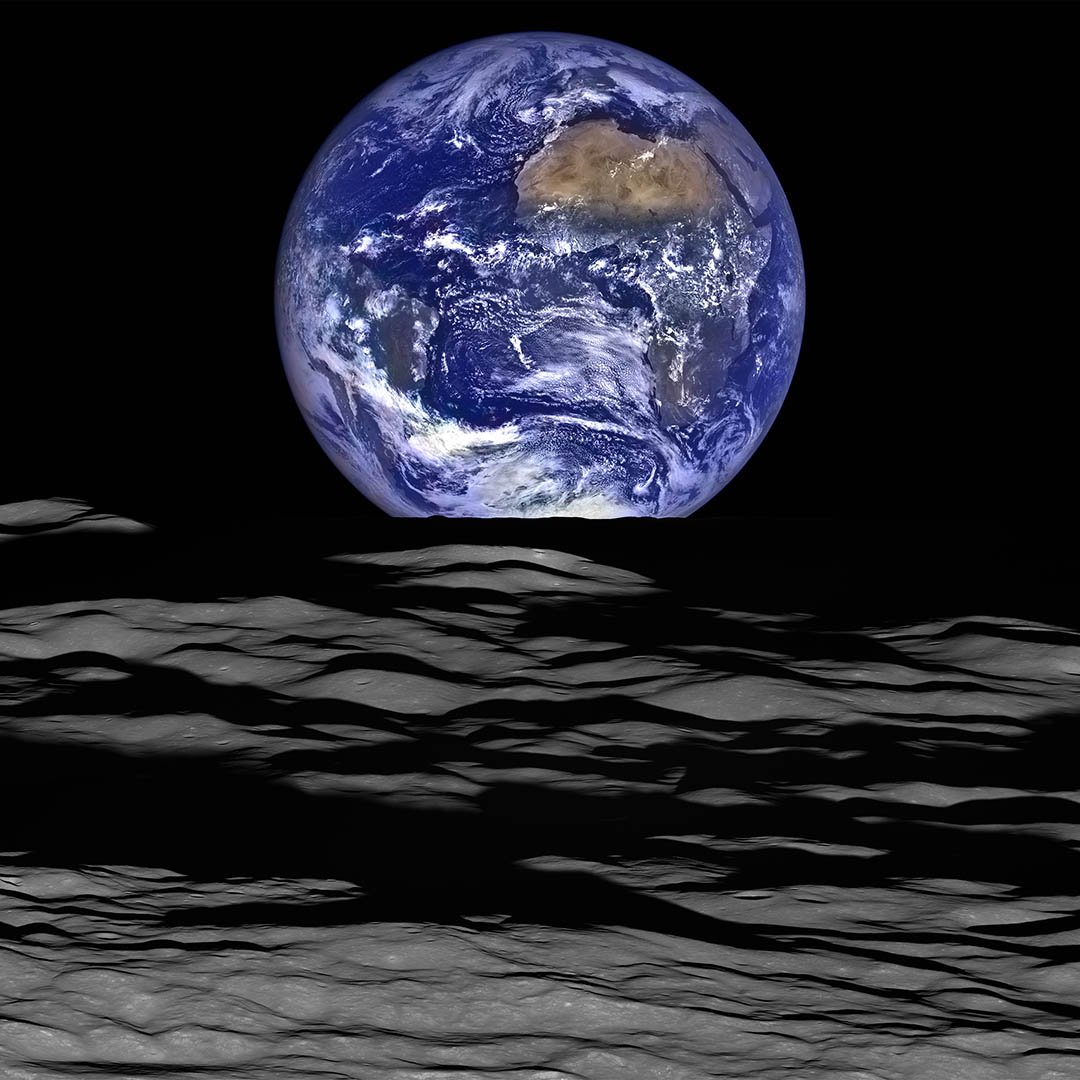
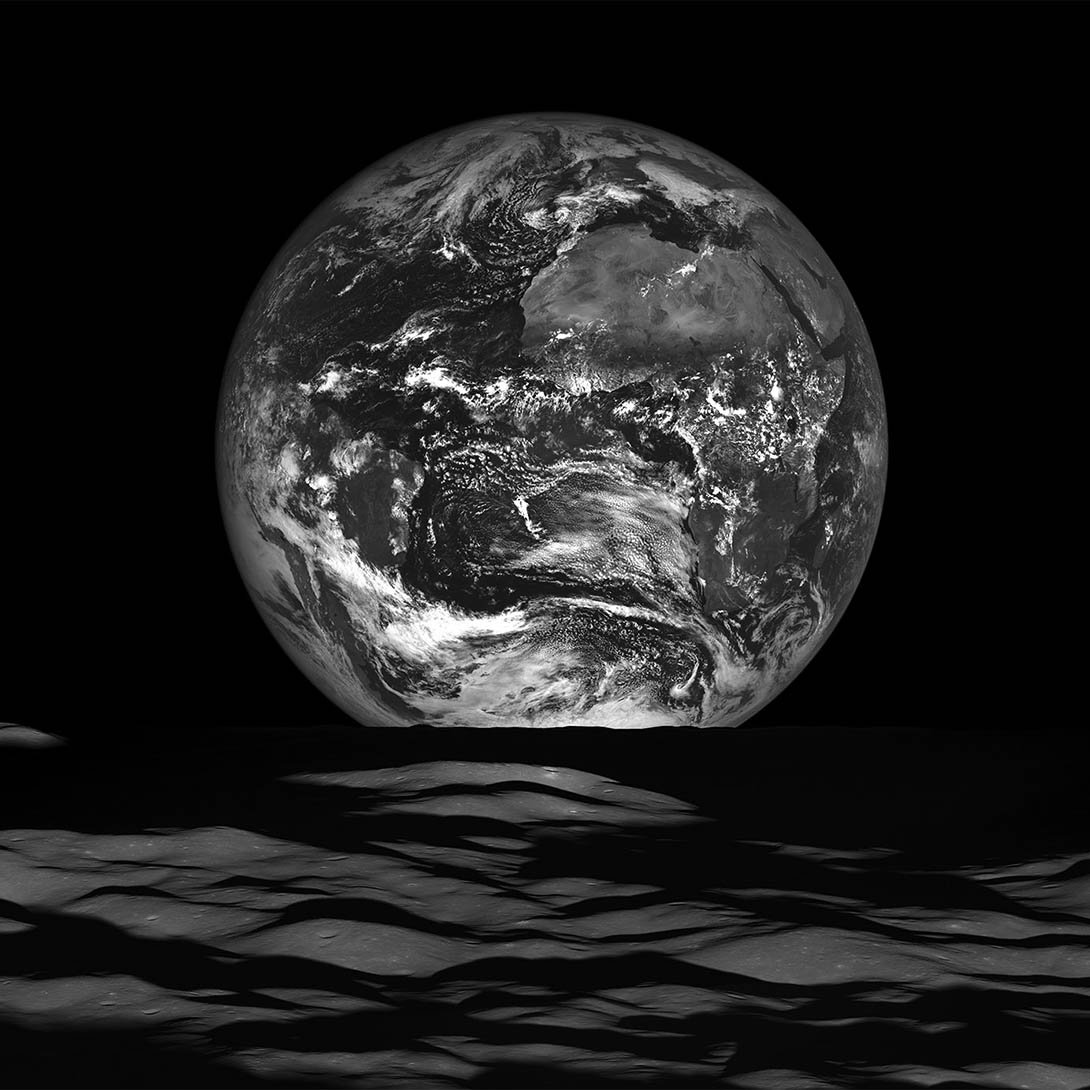
On a crater rim in one of the Moon's polar regions, very high-resolution cameras could permanently record Earth close above the lunar surface and transmit that signal live to Earth.
- From the lunar near side, Earth never rises or sets — it hangs almost fixed above the horizon.
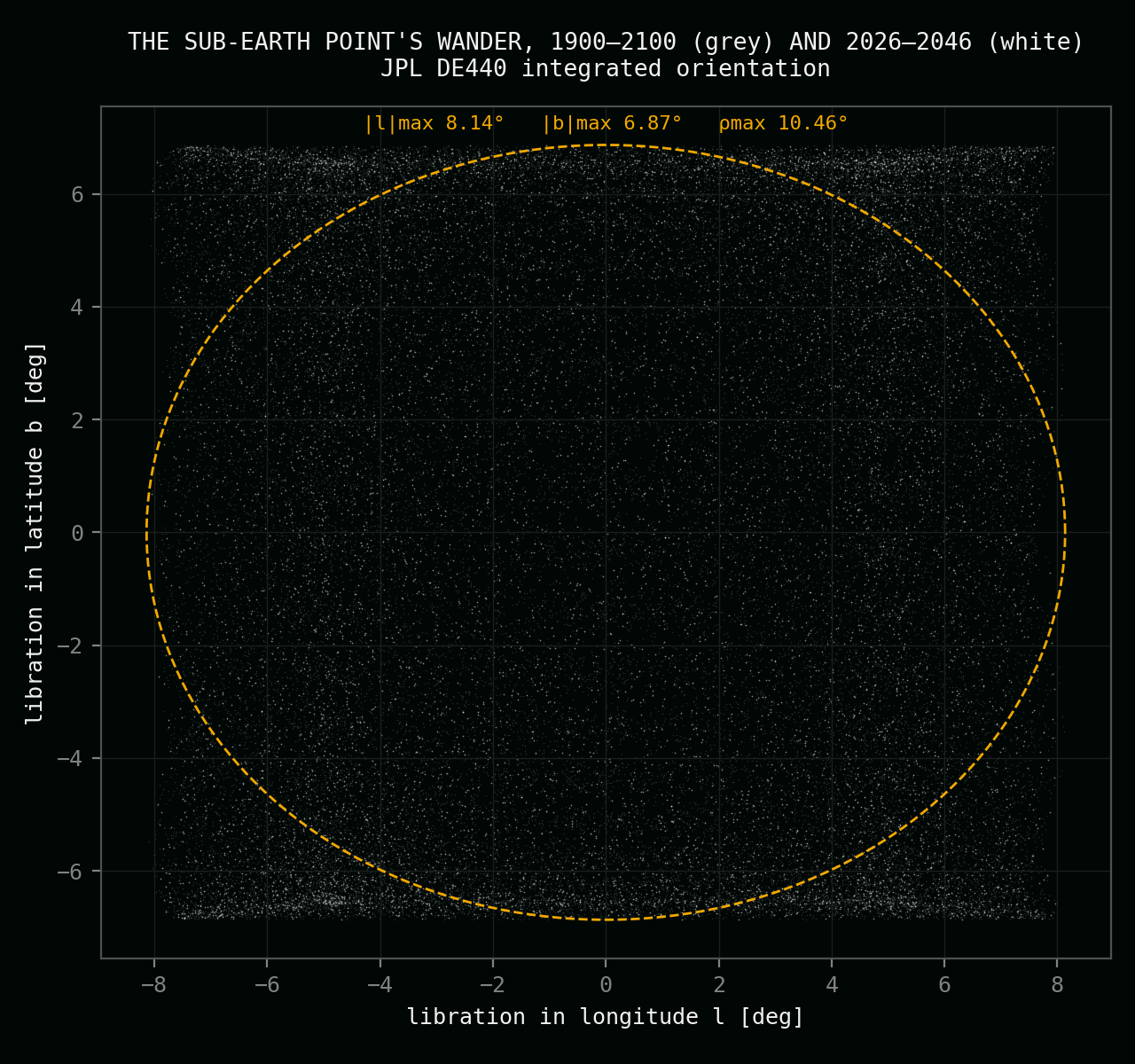
- A single fixed wide shot holds the whole planet in frame across the full 18.6-year libration cycle.
- Continents, clouds, and the day–night terminator keep changing while the viewpoint stays still.
Capability
Three features that define the mission
One viewpoint, held steady for years: the whole Earth, live, in high resolution, from the surface of the Moon.
-
Live Earth feed
A continuous, real-time view of the whole Earth disc from the lunar surface — day and night together in a single frame.
-
Ultra-high resolution
An 8K-class imaging target, so continents, weather systems, and the moving day–night terminator stay sharp across the disc.
-
Continuous lunar operation
A fixed installation on a polar crater rim, planned to keep watching through the long lunar cycle rather than passing overhead and looking away.
How it works
How the system captures Earth from the Moon
Four open design questions take the concept from a chosen point on the Moon to a live picture on Earth.
-
01
Choose the site
A point on the sub-Earth meridian where Earth never drops below the horizon across the full libration cycle.
Moon locations -
02
Deliver the hardware
A lander places the installation at the coordinate, or a rover surveys nearby for the best final camera spot.
Transport -
03
Power it
A power concept that fits the polar lighting geometry and keeps the camera running for the long term.
Power supply -
04
Transmit live
A communication path carries the high-resolution stream from the lunar surface back to viewers on Earth.
Transmission
About the project
Why we look back at Earth from the Moon
Earth stands almost fixed in one spot of the lunar sky, as long as you are on the near side of the Moon. In the Moon's polar areas it sits very close to the surface — the perfect place for a permanent view of both worlds at once.
A permanent live image of our home planet in super-high resolution could be a people-connecting message: live "Earth phases", solar eclipses, and, during lunar eclipses, the red glow of Earth's atmosphere.
By the numbers
The numbers behind the vision
-
8K
Target image resolution
-
24/7
Continuous live-transmission goal
-
€500M
Order-of-magnitude estimate (Prof. U. Walter, 2019)
-
18.6yr
Lunar libration cycle the framing must cover
Visual gallery
The science behind the site selection
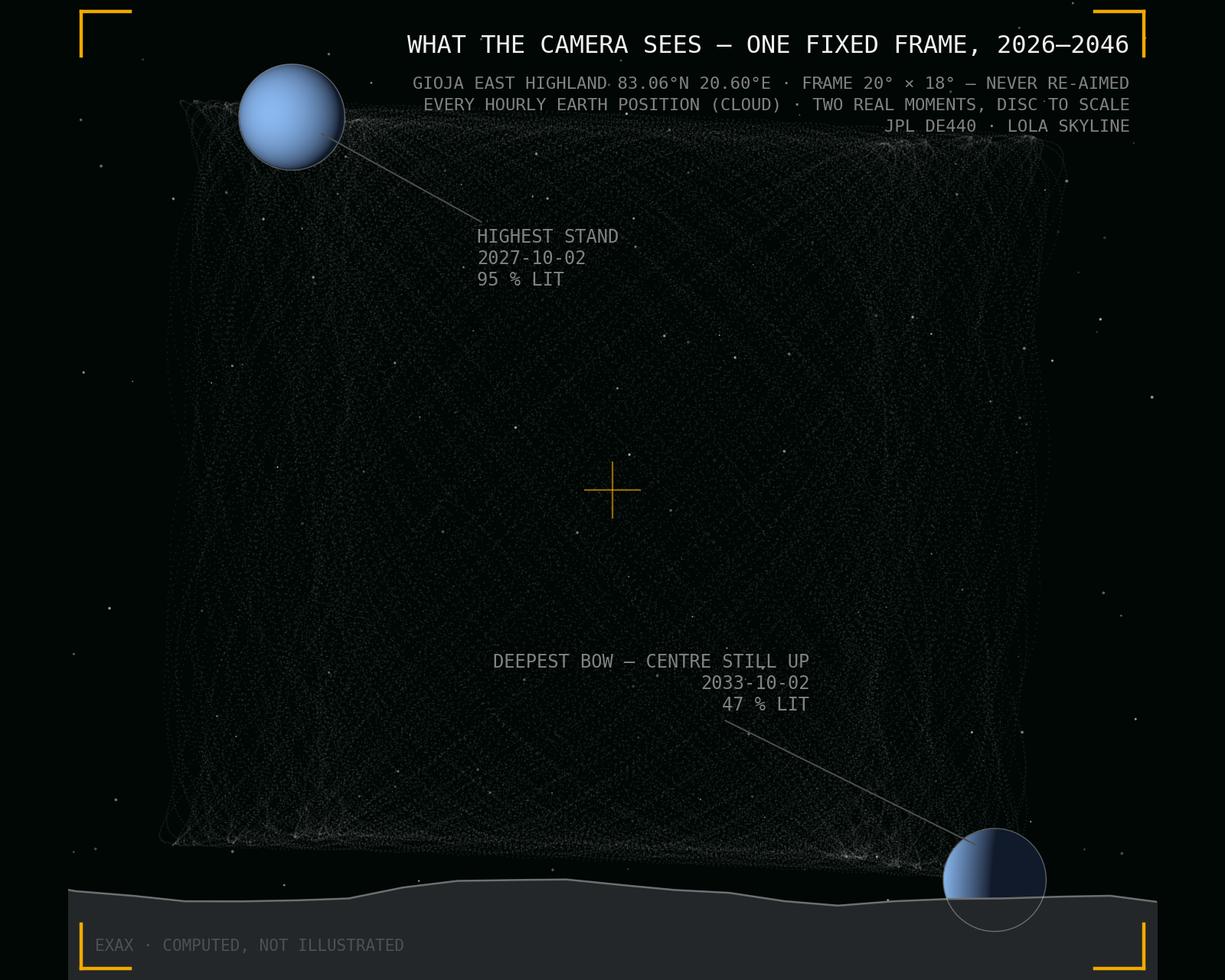
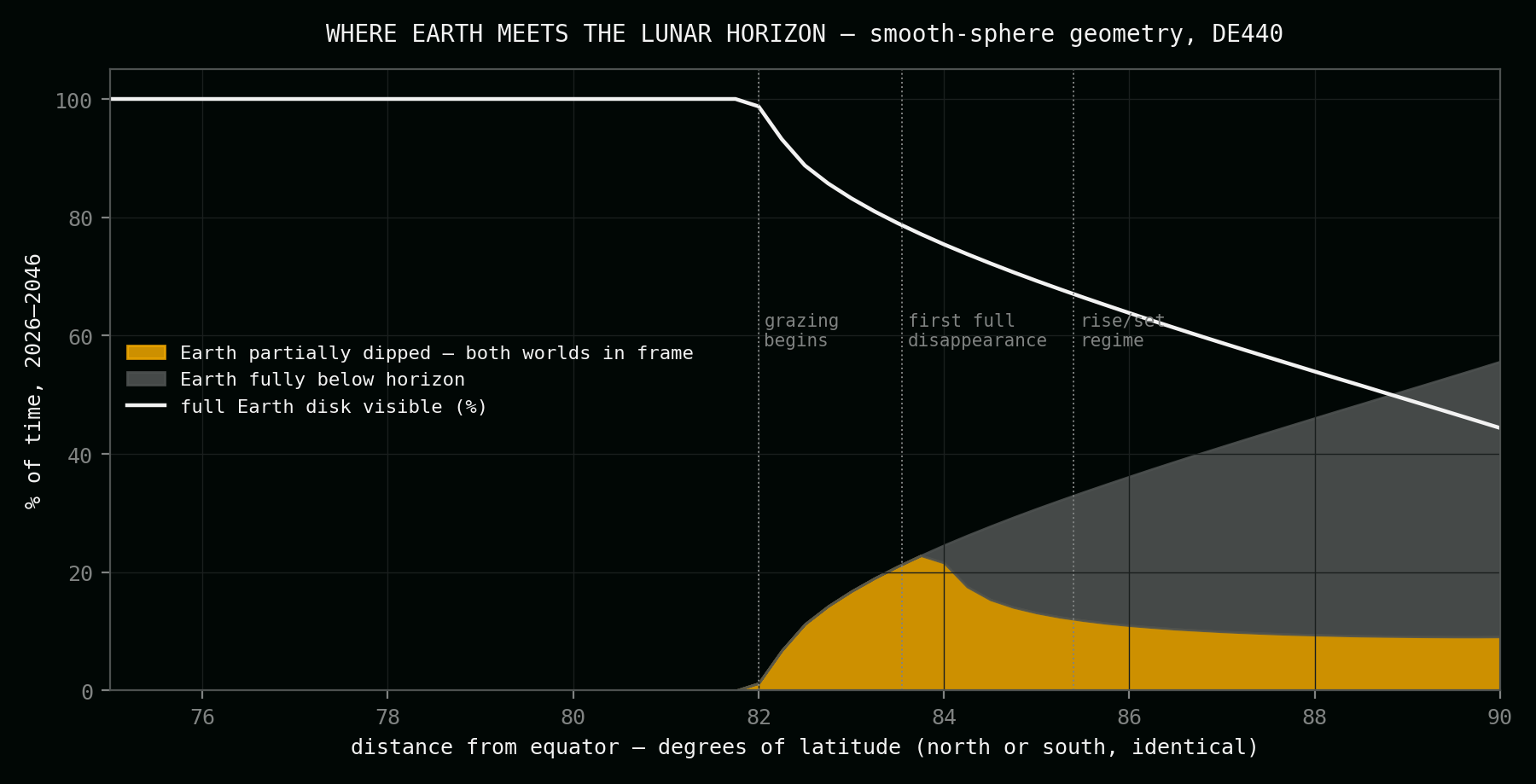
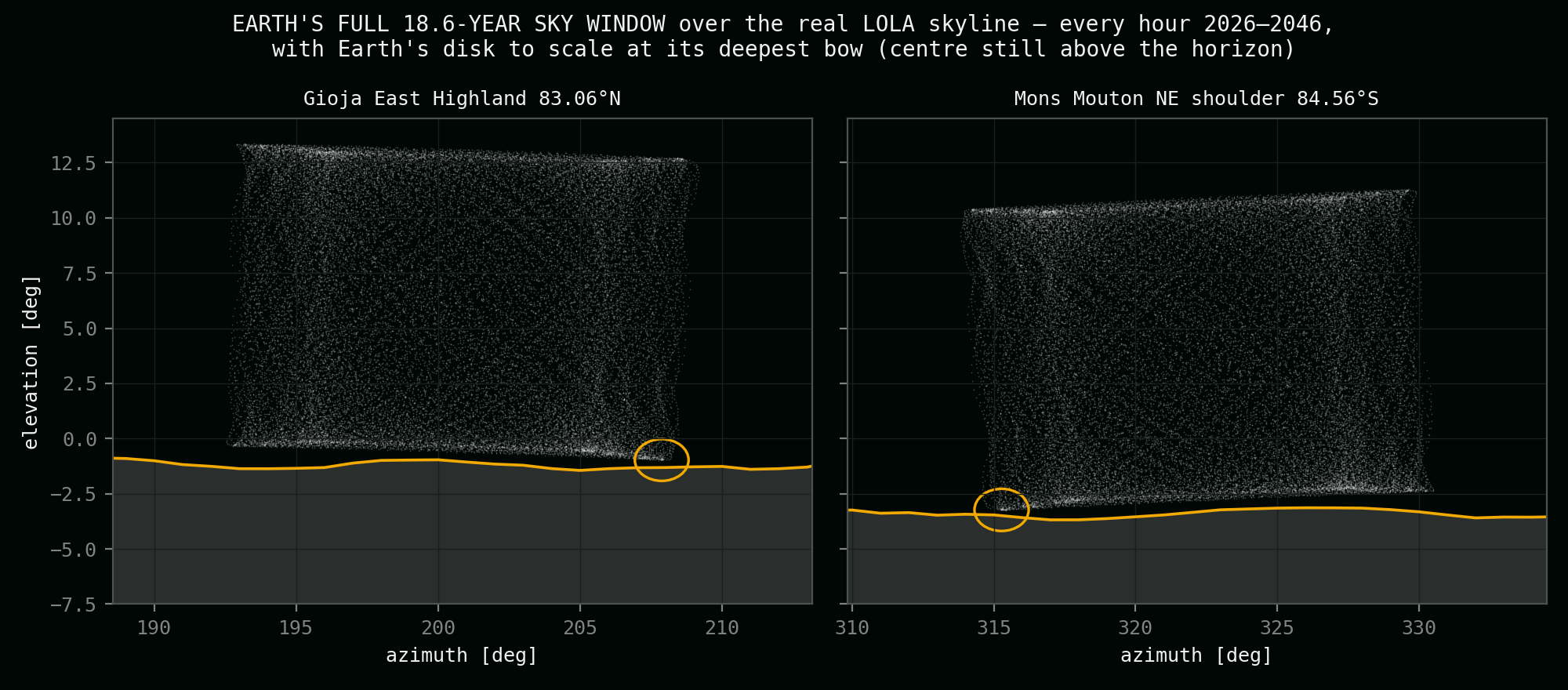
Maps and sky plots from the positional-astronomy and terrain study that identified the two candidate observatory sites.
Support the project
The exax concept is ambitious — it would require substantial resources and future lunar infrastructure. The immediate need is clarity, review, and structured development of the idea.
Questions
Frequently asked questions
What is EXAX?
A concept for a permanent high-resolution camera on the Moon that shows Earth live above the lunar horizon. It is an informational, AI-assisted project — not an active mission, operational camera, or funding vehicle.
How would it work?
A fixed camera on a polar crater rim keeps the whole Earth in frame while continents, clouds, and the day–night line move across it. The signal would be transmitted live back to Earth. The open design questions — site, transport, power, and transmission — are explored across the project pages.
Where would the camera sit?
On the sub-Earth meridian, the line on the Moon that points most directly at Earth. A positional-astronomy and terrain study identified two candidate sites: a northern one at 82°30′N (the geometric solution) and a southern one at 79°30′S (the geological solution). See Moon locations.
What would Earth look like from there?
Earth never rises or sets. It hangs low in one corner of the sky — roughly three to four times as wide as a full Moon looks from Earth — drifting slowly within a small patch and cycling through phases about once a month.
When will this happen?
EXAX is a concept in development. It does not claim a funded mission, a launch provider, or a launch date. The pages describe what such a project would need to solve, not a committed timeline.
How can I support it?
The most useful support right now is review and structured development of the idea. The support page keeps its framing deliberately modest, and the contact page is open for questions and collaboration.